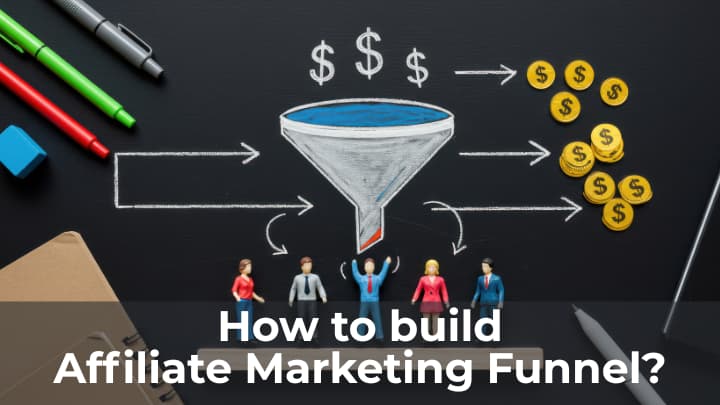
Affiliate marketing is often hailed as one of the most accessible ways to start an online business. You find a product you believe in, promote it, and earn a commission for every sale you generate. However, the difference between those who earn a few sporadic commissions and those who build a sustainable, high-income business almost always boils down to one thing: a well-structured marketing funnel.
A funnel is a systematic process that guides a potential customer from the moment they discover you to the point where they make a purchase and beyond. Building one from scratch might seem daunting, but it’s a game-changer that transforms random promotions into a predictable revenue stream.
Here’s your step-by-step guide to building a high-converting affiliate marketing funnel.
Stage 1: Top of the Funnel (TOFU) – Attract and Build Trust
The top of your funnel is all about casting a wide net to attract your target audience. At this stage, people are unaware of their problem or a potential solution. Your goal is not to sell, but to provide value and build trust.
1. Define Your niche and audience
You can’t be everything to everyone. A tightly defined niche (e.g., “vegan meal prep for busy professionals” instead of “cooking”) allows you to create highly relevant content that resonates deeply.
Understand your audience’s pain points, desires, and the questions they are asking.
2. Create value first content
Your content is the bait that attracts people into your funnel. Focus on solving problems and answering questions for free.
- Blog posts & articles: Write in-depth guides, “how-to” tutorials, and listicles that address common challenges in your niche.
- Video content: YouTube, TikTok, and Instagram Reels are powerful for demonstrating solutions and building a personal connection.
- Social media: Use platforms like Instagram, X (Twitter), or Pinterest to share tips, insights, and snippets of your longer-form content, always driving traffic back to your owned platform (like a blog or email list).
Key takeaway: No one buys from a stranger. At the TOFU stage, your content is the tool that builds the “know, like, and trust” factor.
Stage 2: Middle of the Funnel (MOFU) – Nurture and Capture Leads
At this stage, a segment of your audience has moved from being casual visitors to engaged followers. They see you as a helpful authority. Now is the time to capture their contact information and deepen the relationship.
1. The strategic lead magnet
A lead magnet is an irresistible free offer in exchange for an email address. It must be highly valuable and directly related to the products you will later promote.
- Examples: A cheat sheet, a short ebook, a video training series, a discount code, or a curated toolkit.
- Pro tip: Your lead magnet should be a logical precursor to the affiliate product. For instance, if you promote project management software, your lead magnet could be “The 5-Day Plan to Organize Your Workflow.”
2. The Email nurturing sequence
Once someone opts-in, they should not be left in the cold. An automated email sequence (often called a welcome series or nurture sequence) is your most powerful tool.
- Days 1-3: Deliver the lead magnet and provide additional, unexpected value. Don’t try to sell yet.
- Days 4-7: Share a personal story, a case study, or more helpful tips. Softly introduce the problem that your affiliate product solves.
- Days 8+: Begin to present the solution, mentioning the affiliate product as the recommended answer. Focus on benefits and outcomes, not just features.
Key Takeaway: Your email list is your most valuable asset. It’s a direct line to your audience, free from the whims of social media algorithms.
Stage 3: Bottom of the Funnel (BOFU) – Convert and Make the Sale
This is where your efforts pay off. Your subscriber is now aware of their problem and trusts your recommendation. Your job is to make the conversion as easy as possible.
1. Craft a compelling recommendation
When you present the affiliate product, be authentic. Don’t just drop a link. Create a dedicated review, a detailed case study showing your results, or a video demo.
- Be transparent: Always disclose your affiliate relationship. Honesty builds long-term trust.
- Address objections: Proactively answer common questions like “Is it worth the price?” or “Is it suitable for beginners?”
2. Create a seamless user journey
The path from your email or blog post to the merchant’s sales page should be frictionless. Use clear call-to-action buttons (e.g., “Click Here to Get My Discount”) and ensure your links are properly tagged so you get credit for the sale.
3. Leverage high converting platforms
The digital landscape is constantly evolving, and successful affiliates stay ahead of the curve. While email is foundational, exploring new, engaging platforms can open up untapped audiences. For instance, the rise of Telegram Mini Apps presents a fascinating new channel for affiliate marketers.
These integrated apps allow for a seamless, interactive experience directly within the Telegram messenger, enabling you to create quizzes, product catalogs, or exclusive content hubs that can drive conversions without users ever leaving the app.
Exploring how to leverage such innovative tools on a dedicated Telegram Mini Apps page can give you a significant competitive edge.
Stage 4: Post-Conversion – Retain and Ascend
A sale is not the end of the journey; it’s the beginning of a customer relationship. A happy customer is your best marketing asset.
1. Follow up and provide support
Check in with the customer after they have made a purchase. Ask if they have any questions about setting up the product. This extra level of care can turn a one-time buyer into a loyal follower.
2. Encourage repeat business
If the merchant has other products, your existing customers are the most likely people to buy them. Once someone has purchased through your link, you can recommend complementary products or upgrades.
3. Build a community
Create a Facebook Group, a Telegram channel, or another community space for your customers. This fosters loyalty, generates user-generated content, and gives you a captive audience for future promotions.
Conclusion: Funnel = Freedom
Building a high-converting affiliate marketing funnel is not a get-rich-quick scheme. It’s a strategic process that requires patience, consistency, and a genuine desire to help your audience. However, the payoff is immense.
By moving away from random link drops and toward a systematic approach—Attract, Nurture, Convert, Retain—you build a business that is not reliant on luck. You create a predictable system that generates leads and sales on autopilot. As you refine your funnel, you can scale your efforts by investing in paid traffic, exploring new content formats, and leveraging advanced advertising platforms like MyBid.io to drive targeted traffic directly to your most valuable offers.
Start building your funnel today; it is the foundation upon which a sustainable affiliate marketing empire is built.