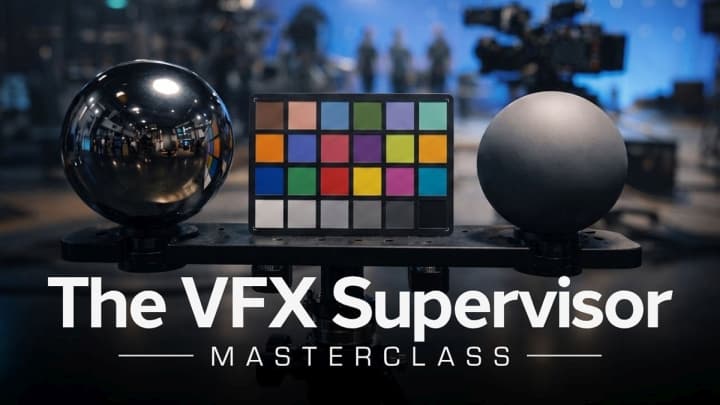
Visual effects supervision sits between creative ideas and real production limits. A supervisor must balance what the director wants with budgets, schedules, and technical reality. Most training focuses on software. Very few courses teach the day-to-day skills needed to run a VFX job from start to finish.
ActionVFX launched The VFX Supervisor Masterclass on September 1, 2026. Emmy and VES Award-winning supervisor Eran Dinur leads the course. It runs a bit over four hours and is self-paced. The program targets senior artists, compositors, current supervisors, and even filmmakers or producers who work with VFX. An early-access group rated it 4.8 out of 5.
Dinur built the course from more than twenty years of feature film work. He uses real examples. The goal is simple: give people a clear playbook for leading VFX work with confidence.
Why VFX Supervision matters?
Productions today run leaner teams and tighter schedules. Mistakes made early become expensive later.
Supervisors who understand the full process can stop small problems before they grow. They also help keep creative goals realistic. The course starts by explaining different supervision models. Some shows use one in-house team. Others split work across several vendors. Students learn how roles change in each setup. They also learn how to set clear communication rules with directors, producers, and department heads.
Dinur shows that technical skill alone is not enough. A supervisor needs to lead. That means setting expectations early and making decisions that protect both the creative vision and the budget.
Building a clear picture of the VFX Pipeline
A supervisor who does not know the full pipeline cannot guide it well.
The second section of the course maps how work moves between departments. Students see how plates, assets, and data travel from camera to final delivery. The course also looks at AI tools from a supervisor’s point of view. It separates useful applications from hype. Students learn where AI can speed up tasks like rotoscoping or early tracking. They also learn where traditional methods still work better.
Just as important, they practice explaining AI limits to directors and producers in plain language. This section helps students spot bottlenecks early and keep the whole process moving smoothly.
Core techniques every Supervisor needs
Even supervisors must stay sharp on technical basics. The course covers how to judge camera motion for tracking, how to assess matting problems, and how to choose the right approach for common VFX tasks. These include set extensions, clean-ups, and simple composites.
Real film examples drive the lessons. Students break down sequences and see how early choices affect later work. The course supplies practice footage and test plates so learners can apply the ideas themselves. The focus stays on decision-making, not software buttons. The same principles work whether a team uses Nuke, After Effects, or other tools.
Pre-Production: Where Supervisors have the most impact
Pre-production gives supervisors their best chance to shape a project.
The course teaches a clear method for script breakdowns. Students learn how to mark every VFX element, judge its difficulty, and note links to practical effects or camera needs. From the breakdown comes the bid. Students practice building realistic estimates that include contingency and revision time. The course provides a sample script with both breakdown and bidding examples.
Previsualization also gets strong attention. Students learn how to use previs and simple mockups to test ideas early. This step helps align the director, camera team, and VFX crew before shooting starts. It also reveals cheaper or simpler ways to achieve the same result.
Working effectively on set
Once cameras roll, the supervisor’s job shifts to real-time problem solving. The course covers how to work with the camera, lighting, and art departments. It shows how to gather the right reference material and make sure the data package is complete for post.
Students receive an on-set gear checklist. It lists the basic tools needed for efficient work on location. The course also teaches how to influence practical setups. Small changes in lighting or camera movement can make the later digital work much easier. Students practice giving clear, useful suggestions without slowing the set down.

Guiding the work through Post-Production
The final section covers the path from editorial to delivery. Students learn how to structure reviews, manage versions, and keep feedback clear and useful. The course stresses the importance of consistent notes and steady communication with vendors and clients.
Dinur shows how decisions made in pre-production and on set decide how hard post will be. Good early planning makes the final stages far smoother. Students finish with a practical sense of how to close out a show cleanly.
Who will benefit from this VFX master class course?
Senior artists and compositors gain the leadership tools needed to move into supervisory roles. Working supervisors can compare their methods with an experienced professional’s approach and refine their process.
Filmmakers, directors of photography, and producers learn how their on-set choices affect VFX time and cost. This knowledge helps them protect both schedule and budget. The course is software neutral. The ideas apply across different studios and toolsets.
Downloadable resources, on set checklist, practice plates, and a sample script with breakdown and bidding steps give students material they can use right away.
Conclusion
The VFX Supervisor Masterclass does not claim to replace years of real production experience. Instead, it packages hard-won knowledge into a clear, structured form. Students leave with a better understanding of the full VFX process and practical ways to lead it.
In an industry that rewards people who can see the big picture, these skills matter. ActionVFX has given artists and production professionals a useful resource for stepping into or improving the supervisor role. The course is available now through ActionVFX Academy.
For more details, check their official page.