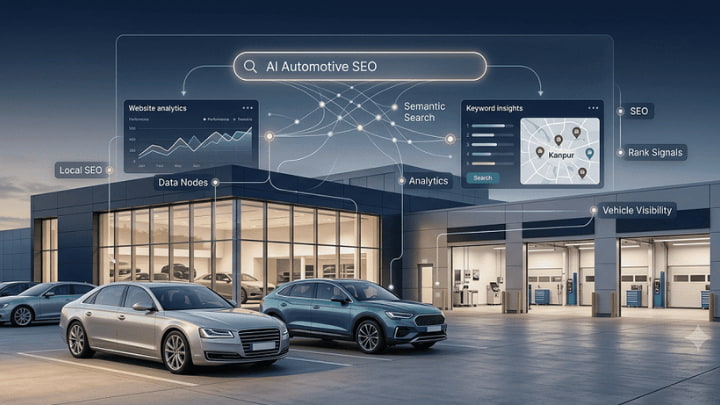
A car purchase rarely begins at a dealership today. Many buyers spend days watching reviews and comparing models before making a decision. They may also check ownership costs and read customer experiences. When a warning light appears, many drivers search for possible causes before contacting a mechanic.
This change has created a new challenge for automotive businesses. They are not only competing for customers who are ready to buy. They must also reach people who are still researching. They need to be visible when customers compare options and try to understand their choices.
How has the automotive customer journey changed?
The journey from search to sale is rarely simple. A customer may begin with a general question and later search for a specific solution. They may compare different options before looking for a business. Every search can reveal a new content opportunity.
For example, someone worried about poor fuel efficiency may research tire pressure and maintenance. They may also look into driving habits or diagnostic services. A strong website should support every stage of this journey. Educational articles can help people who are still researching.
Service pages can support customers with a clear need. Simple contact options can help visitors take the next step.
Why does search intent matter more than keyword repetition?
Search intent explains what a person wants from a search. Keywords only show the words that person entered.
A customer searching for “best family SUV” may want to compare models. Another customer searching for “SUV repair near me” may already need a service provider. These users need different information. One may need a buying guide.
The other may need a service page with prices and contact details. Using the same keyword on both pages will not solve both needs. Search intent helps businesses create better content for each stage. It can also improve the customer journey.
Automotive businesses can group searches into four main types:
- Informational searches: The customer wants to learn something. Examples include “how often should I change my oil?” and “why is my car overheating?”
- Comparison searches: The customer is reviewing choices. Examples include “hybrid SUV vs petrol SUV” and “best tyres for long drives.”
- Commercial searches: The customer is considering a product or service. Examples include “car battery replacement cost” and “best car detailing package.”
- Local searches: The customer wants a nearby business. Examples include “car repair shop near me” and “brake service in Manchester.”
This approach creates stronger content. It gives search engines more context without forcing the same keyword into every paragraph.
The goal is simple. Write for the customer’s purpose rather than the keyword alone.
Where can AI make Automotive SEO more practical?
Automotive websites cover many subjects. These subjects include repairs, maintenance, vehicle comparisons, and ownership advice.
Researching every topic manually can take a lot of time. AI tools can help marketers organize this work. They can group related searches and identify common questions. They can also reveal content gaps and connect related topics.
This is where AI SEO for Automotive Businesses can support a broader content strategy. AI should not be used to produce endless articles without a clear purpose.
Marketers can use it to find the subjects that deserve attention. They can also use it to understand how different topics connect. For example, battery-related searches can support several useful pages. These may cover warning signs, battery care, replacement options, and seasonal changes.
What can human expertise add to AI assisted content?
AI can help produce content quickly. It cannot replace real automotive experience.
A technician understands the problems that customers often describe incorrectly. They know which symptoms may point to a serious issue. A service advisor also knows what customers ask before approving work. This information can make a guide more practical.
Human knowledge adds detail and judgment. It helps a business explain what may happen in a real situation.
For example, AI may create a basic article about brake noise. A technician can explain the difference between a light squeal and a grinding sound. The technician can also explain when the vehicle should not be driven. This type of advice gives the article more value.
Dealership teams can add similar insight. They know which questions first-time buyers often ask. They can explain concerns about fuel economy and running costs. They can also discuss the difference between choosing a vehicle for city use and choosing one for long-distance travel.
A professional can check the vehicle type and service conditions. They can then adjust the advice for the intended audience. This is especially important because automotive decisions can affect safety. The content should not make broad claims without context.
How can automotive brands use local search more effectively?
Location is important for many automotive services. People searching for repair shops and tire centers usually want a business nearby. The same applies to body shops and detailing providers. Customers want services that are easy to reach.
Local SEO should include more than a list of locations. Businesses can create resources about local driving conditions and seasonal maintenance. They can also cover services that people in the area commonly request. These topics can make local content more useful.
A business in a cold region could explain how to prepare vehicles for winter. A company in a busy city could discuss maintenance for frequent short trips. The goal should be genuine usefulness. Businesses should avoid creating identical pages with different city names.

What role does website experience play?
A visitor from a search result is only the beginning. Strong content may not create enquiries if the website is hard to use.
Automotive websites should make important information easy to find. Visitors should quickly understand the services and operating areas. They should also find contact methods without difficulty. The next step should be clear.
Mobile usability is especially important. Many automotive searches happen away from a desktop computer. Someone dealing with a vehicle problem should not face a complicated menu. They should be able to find a service page or phone number quickly.
How should businesses review AI-Generated content?
A qualified professional should review technical sections. This is especially important for content about brakes, tyres, engines, batteries, and electrical systems.
A simple review process can include these steps:
- Check vehicle specifications.
- Confirm maintenance advice.
- Review prices and service details.
- Remove unsupported claims.
- Add local and company information.
- Check the content for safety concerns.
- Read the final version from a customer’s point of view.
Businesses should also check whether the article matches the search intent. A customer looking for a local repair shop should not land on a general article without a clear service link. The content should help the reader take the next step. That step may be booking an inspection or requesting a quote.
Industry data highlights the value of online research. A Google and Kantar study found that many vehicle buyers use online sources during the buying process. This makes accuracy important at every stage. A poor article can affect how people view the entire business.
AI can improve speed. Human review protects quality and trust.
What should automotive businesses focus on next?
Modern automotive SEO is not about publishing the highest number of pages. It is about answering the right questions. Companies can begin by listening to customers. They can collect common questions and improve existing resources.
They can also create content around real customer needs. AI can make research and planning faster. Human expertise can keep the final content accurate and distinctive. This balance can create a stronger digital presence.
A useful website does more than attract clicks. It helps potential customers understand their choices and become familiar with the business. It also gives them a clear path forward when they are ready to take the next step.