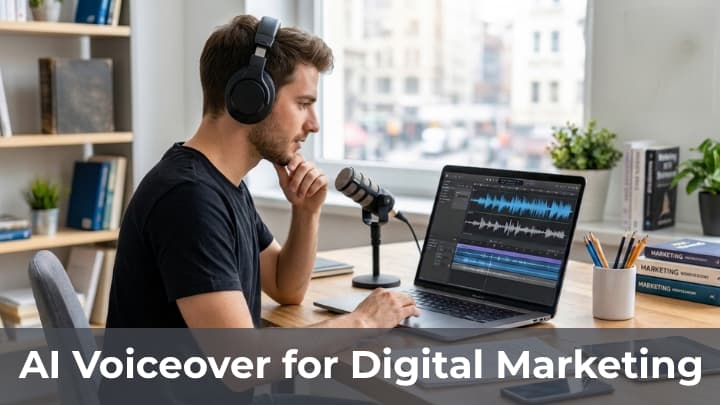
Digital marketing teams publish content across websites, social platforms, video channels, and advertising networks. A campaign may include a product explainer, a short social video, a tutorial, and a presentation for sales teams. Each format has its own demands, but they all need a clear message.
Voiceovers can add explanation and personality to visual content, while AI voice technology in digital marketing gives another option for producing that narration.
Why the voice behind a campaign matters?
A voiceover can guide viewers through a product demonstration, explain a service, or emphasize the benefit a business wants customers to remember. It should fit the brand and the audience.
A financial explainer may need a measured, reassuring delivery, while a short lifestyle promotion may call for a brighter and more energetic style. The voice should strengthen the message rather than distract from it.
Faster production and easier revisions
Traditional recording often involves arranging a session, capturing audio, editing mistakes, and returning to the studio when copy changes.
Murf AI text-to-speech tools can shorten parts of this workflow. A marketer can prepare a script, generate a draft voiceover, and revise the wording or delivery before the final video is assembled. It offers voiceover production tools and voice customization options for creators and businesses. Its official website is Murf AI official website with all product details.
Keeping the brand message consistent
Consistency matters when a company publishes many pieces of content. Teams can create a simple voice guideline that describes the preferred tone, pace, pronunciation of brand and product names, and the style of language used in scripts.
The same guideline can be applied to advertisements, product walkthroughs, onboarding videos, and internal presentations. Each finished asset should still be reviewed to ensure it sounds appropriate in context.
Adapting campaigns for different markets
Businesses serving international customers may need localized versions of their videos. Translation and AI dubbing tools can help teams prepare alternative language tracks, but a direct translation is not always enough. Idioms, product names, cultural references, and calls to action may need adjustment.
A fluent reviewer should check the translated script and listen to the final audio before the campaign goes live. Murf describes its dubbing and localization capabilities on its official platform.
Practical checks before publishing
Start with a script written for speech, not copied directly from a long web page. Keep the opening focused, use natural sentence lengths, and make the call to action easy to understand. Choose a voice that fits the audience, then review pronunciation, pacing, pauses, and emphasis.
Finally, listen to the narration alongside the video. Make sure captions are accurate and that music or sound effects do not make the spoken message difficult to hear.
Conclusion
AI voice technology can give marketing teams more flexibility when producing and updating audio content. It does not replace campaign strategy, original creative work, or editorial review. Instead, it can become one part of a well-managed production process. With a clear message and careful quality checks, tools such as Murf can help brands create voiceovers for a wide range of digital marketing formats.