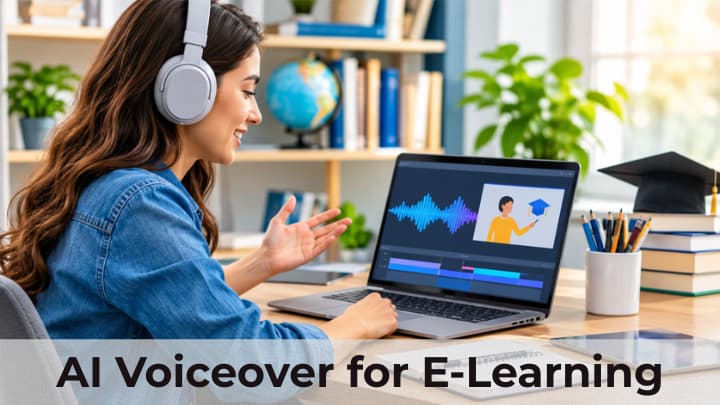
Online education has changed the way people learn. Students can now access lessons, training sessions, and specialist knowledge from almost anywhere. Yet a successful online course needs more than well-designed slides and written explanations. Clear narration can help learners follow ideas, understand unfamiliar terms, and stay connected with the lesson.
AI voiceover technology give educators another way to add spoken explanations to digital learning materials.
Why audio matters in digital lessons?
Listening can make a course more flexible. Learners may replay an explanation, listen while reviewing a presentation, or use audio when reading a screen is inconvenient. Narration is especially useful when a lesson includes a sequence of instructions, a demonstration, or a complex subject that benefits from being explained step by step.
Audio should support the learning objective rather than simply repeat every word on a slide.
A different approach to course production
Recording every lesson with a human speaker can require a quiet room, a microphone, editing time, and additional takes when a script changes. Text-to-speech technology offers an alternative for suitable projects: an educator prepares a script, chooses a voice, generates narration, and reviews the result
Murf provides AI voice tools for creating voiceovers, with controls that can help users shape delivery and pronunciation. Explore the platform at Murf AI official website or read the official overview at Murf official product overview.
Making narration clearer and more useful
The script remains central to quality. Short sentences, familiar vocabulary, and clear transitions generally work better when spoken aloud. Course creators should check names, technical terms, and acronyms, then listen to the full recording before adding it to a lesson.
Adjusting pacing and inserting pauses can give learners time to absorb important information. It is also worth checking that the narration matches the visuals and does not compete with background music.
Supporting different audiences
Some learners prefer reading, while others benefit from listening or combining both formats. Offering captions alongside narration can make a course more convenient and support accessibility. For international programs, language and accent options may also help teams prepare learning materials for a wider audience.
Any translated or generated narration should be reviewed by someone familiar with the language and subject matter before publication.
A thoughtful role for AI in education
AI narration is not a substitute for good teaching. Educators still need accurate content, logical lesson structure, suitable examples, and meaningful activities. Used carefully, however, voice generation can make it easier to update a lesson or produce consistent narration across a series of modules.
The most effective approach combines human instructional judgment with tools that reduce repetitive production work.
Conclusion
As online education continues to develop, audio will remain one useful way to make digital lessons easier to follow. AI voiceover platforms such as Murf can support the production process, but the final learning experience depends on clear writing, careful review, and thoughtful course design. When those elements work together, narration can help make e-learning more engaging and accessible.