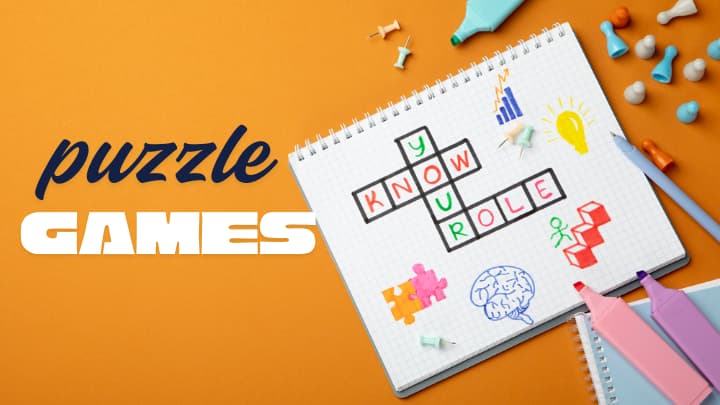
Puzzles have been used by people for a very long time, and they are part of normal life for many folks. People of all ages like them because they help to relax or give your brain something to do when you want a break. You might see kids playing with blocks on the floor at home, or someone tapping on a phone to match shapes.
They come in many forms. You can find traditional jigsaw puzzles with beautiful pictures, brain-teasing word games, matching games, and even Abstract Puzzles that challenge you with colors, shapes, and patterns. Whether you prefer sitting at a table with physical pieces or playing on your phone during your commute, there is a puzzle game out there for everyone.
Why we love puzzle games?
Puzzle games are popular because that make you feel good when you solve them. Unlike many hobbies, puzzles don’t need special tools, large amounts of money, or much space. They fit well into busy lives and different homes. You can play puzzles alone or with friends and family around a table or screen. Since puzzles come in many difficulty levels and styles, there is usually something right for different ages and interests.
Puzzle games also help your brain. When you solve parts of a puzzle, your body releases dopamine, which makes you feel happy and satisfied. This improves your mood and can lower stress. Puzzles help you focus and recognize patterns. Because of this, they are helpful for relaxing as well as for keeping your mind active and sharp.
Types of puzzle games
Jigsaw puzzles
For many people, “puzzle” still means a box of cardboard pieces forming a single big picture. Jigsaws range from small 100-piece sets for beginners to huge 5,000-piece or larger challenges. Modern designs cover everything from landscapes and paintings to animals, city views, fantasy scenes, maps, and abstract art.
Digital puzzle games
Phones, tablets, and computers are the new entry. Digital puzzles avoid lost pieces. It can also save progress automatically and offers hints if you get stuck. New content can usually be downloaded in form of apps.
Popular formats include match-three games, sliding block puzzles and pattern matching games.
Word puzzles
Word based are one of the most played. Crosswords, word searches, anagram games, spelling challenges, and simple daily word riddles are some of the most common. They are especially appealing to people who enjoy reading, writing, or playing with vocabulary.
Logic puzzles
Logic puzzles ask you to work with rules and patterns. Sudoku is the best known example in this category. Others are number placement games, grid based puzzles and classic brainteasers. It encourage logic and step-by-step thinking.
How puzzles support your brain?
Working on puzzles constantly nudges your memory and attention. You remember shapes, colors, and positions. This kind of repeated mental effort helps keep short term memory active and flexible. Puzzles also encourage focus at a time when distractions are everywhere. Over time, this habit of calm concentration can carry over into work and study.
On top of that, every puzzle is a miniature problem solving exercise. You look at the whole and break it into smaller parts. You learn to experiment with different approaches and adjust your strategy. These all helps in real life planning and decision making situations.
Many people also find puzzles soothing. For a little while, your mind shifts away from worries and problems.
Choosing the right puzzle for you
The best way to enjoy puzzles is to start at a level that feels easy and then gradually increase the challenge.
- Beginners usually do well with jigsaws in the 100–300 piece range.
- Intermediate players often 500–1,000 pieces.
- More experienced puzzlers may prefer 1,500–3,000 pieces
- Dedicated fans can explore 3,000+ piece sets or especially complex designs.
Picking a theme you genuinely like makes a big difference. If you love animals, nature, food, or famous artworks, look for those images on a box or in an app. Enjoying what you are looking at keeps you interested during slower sections.
Age and ability should guide choices as well:
- Young children (around 3–7) loves big pieces, bold colors, and familiar characters. These are usually with no more than 10–25 pieces.
- Older children (8–12) can handle 50–300 pieces. It can have more detailed images and simple word puzzles.
- Teenagers and adults can explore nearly any style. The key is to find something challenging enough to be interesting without becoming discouraging.
- Seniors often do best with clear and high-contrast images. They will go for designs that avoid lots of tiny details.
Common mistakes to avoid
A few simple habits can make puzzling more enjoyable:
- Don’t force pieces together. If something needs to be bent or pushed hard, it’s almost certainly in the wrong place and may get damaged.
- Work in good lighting so colors and details are easy to see. It reduces eye strain and frustration.
- If you feel stuck, step away for a while. A fresh look often reveals something you missed.
The future of puzzle games
New technologies are expanding what puzzles can look and feel like. Virtual reality can place you inside a puzzle environment where you manipulate pieces in 3D environment. AR and VR in games can overlay digital hints or moving elements on top of a physical jigsaw. Some apps now use AI to turn your own photos into custom puzzles or generate new challenges tailored to your skill level.
Even so, traditional puzzles remain deeply loved. There is a particular pleasure in holding real pieces and solving it.
In reality, both digital and physical puzzle formats will continue to make us satisfied.