Artificial intelligence is a deal in business these days. Companies are using intelligence to figure out. What customers do automate boring tasks, catch people. Who are cheating make better suggestions and make decisions faster. To make artificial intelligence systems work well. They need a lot of information and some of this information is private stuff about customers.
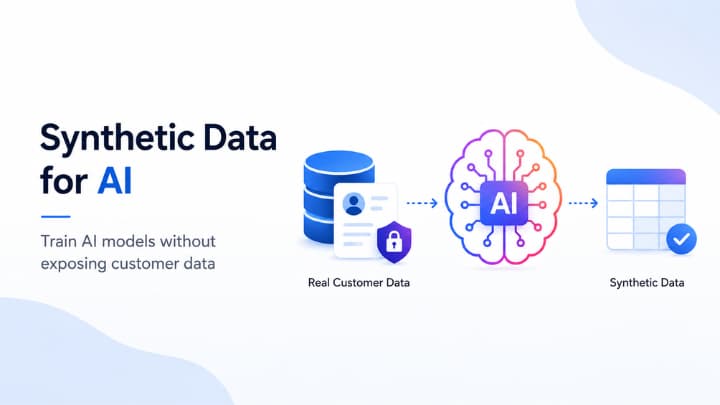
This is a problem. Businesses want to make intelligence models. That are really smart but they also have to keep customer information. Safe and follow the rules, about data privacy. Now people are talking about data as a way to solve this problem. Synthetic data lets companies make datasets. That work like real information without actually using real customer information.
Artificial intelligence can use data to learn and get better without putting customer privacy at risk. Companies can use data to build smarter artificial intelligence models without worrying about sensitive customer information.
What is Synthetic Data?
Synthetic data is information that computer systems make. It is not collected from people. Computer systems can make this information. Using math models, machine learning systems, simulations or generative AI. For example a company has records of its customers. These records have things like how old the customersre what they buy where they live and what they have bought before. Of letting developers look at these real records the company can make a synthetic dataset that looks similar.
The fake records are made to look like the records but they do not have any direct connection to real people. This makes synthetic data very useful for testing making things doing research and training AI systems. Synthetic data is good for these things because it has the patterns, as the real data but it is not real.
Synthetic data helps keep peoples information which is very important.
Why are businesses turning to Synthetic Data?
Customer data is important. It also brings problems related to privacy and safety. A database that has names, addresses, payment details or information, about how people behave can be attacked by hackers. Accidentally shared.
Synthetic data makes it possible to not use customer information at every step when building AI. Programmers can use realistic looking data sets without needing to see private information.
For example a bank that is making a system to find fraud could create records of transactions. These records can show buying, strange activity and things that look like fraud without showing real customer transactions.
This way companies can keep moving with AI while also taking care of data properly.
How Synthetic Data helps train AI Models?
AI models need data to figure out patterns. The kind of data they get how many different types of data and how data they get can really change how well they work in the end.
Making data can give developers more information to work with. Companies can make examples that they might not have, in their real data. Let us say a company wants to teach an AI system to spot things that customers do. The real data they have might only have an examples of this. So they can make fake data to create examples of these situations.
This helps the AI model learn. How to recognise things that can happen without the company having to show more real customer information. This is good because it helps the AI model learn. About customer activity and it keeps customer records private.
Reducing privacy risks
One of the advantages of synthetic data is that it can really help reduce privacy exposure.
When businesses use customer information. To develop things they have to be very careful about who gets to see it and how it is stored. Even if they have security measures in place letting too many people access sensitive data can still cause problems.
Synthetic data is very useful because it gives developers and testing teams. The information they need without letting them see the customer records. Synthetic datasets can be used by developers, analysts and testing teams. To get information that looks like the data used in production but they do not get to see the actual customer records.
However synthetic data is not automatically private. If the datasets are not generated properly. They might still have patterns that could reveal information about people. So businesses need to make sure they test. The privacy of data and have good governance. In place before they start using synthetic datasets. Businesses need to do this to ensure. That synthetic data really is private and does not put anyone’s information at risk.
Making AI development faster
Synthetic data can also speed up AI development. Developers often need large datasets. To test new features, applications, and machine learning models. Getting approval to use real customer data. Can take time because privacy, security, and compliance teams may need to review the request. Synthetic data can provide a faster alternative for many development tasks.
A development team can generate datasets for different situations and immediately use them for testing. This is particularly useful during early product development. when teams need to experiment quickly.
The same principle can be useful beyond technology companies. Even businesses working with agricultural machinery can use synthetic datasets. To test digital services, customer support systems, or predictive tools without exposing actual customer records.
Improving data diversity
Another important benefit is data diversity. Real-world datasets do not always have examples of rare events.
Synthetic data can be made to show customer profiles, market conditions, transactions or business situations. This gives AI developers chances to train models in many different situations.
For example an online retailer could create examples that include different buying habits, seasonal needs, product choices and strange shopping behavior. These examples could help an AI system get ready, for situations that’re hard to get from old data alone.
Applications across industries
Synthetic data is being used in lots of industries.
Healthcare is one of them. Synthetic data can be used to make patient records. These fake records can be used to help with research and to develop intelligence. This is good because it means people do not have to look at medical information.
There are industries that use synthetic data too.
- Banking is one of them. Synthetic financial transactions can be used to help make systems that can detect fraud and figure out risks.
- Retail is another one. Businesses can use data to see how customers might act. They can see what customers might buy. When they might buy it.
- Automotive companies use data as well. They can make driving scenarios to test systems that make vehicles smarter.
- Technology companies use data too. They can use datasets to test their software and systems that recommend things to people.
All these examples show that synthetic data is not just for one type of business or intelligence system. Synthetic data can be used in different ways and, in many different industries. Synthetic data is really useful. It can be used to help lots of different people and businesses.
What businesses should consider
Artificial intelligence models still need information that shows what happens in the real world. Businesses should figure out what information the artificial intelligence system really needs. Then they can decide if synthetic data is good enough for that.
People should also check the quality of the data. If the fake records look real but have patterns the artificial intelligence will not work well.
It is also important to test for privacy. Companies should make sure the synthetic data sets do not accidentally have information from the real data. Companies need to have rules about how synthetic data should be made tested, stored and shared. This will help them make decisions, about synthetic data and artificial intelligence systems and synthetic data.
The future of Synthetic Data
As more companies use intelligence. The need for data that is helpful and keeps peoples private information safe is expected to get bigger. Synthetic data might play a role, in the plans of businesses that want to try out AI. Don’t want to risk sharing customer details.
The tools used to make this data are also likely to get better. Improved ways of making data could create sets. That show real-life situations in an accurate way while keeping privacy rules strong. For companies the aim is not just to make data. The aim is to make data that’s helpful, varied, trustworthy and handled in a responsible way.
Conclusion
Synthetic data gives companies an option to build and teach AI systems without depending completely on private customer details. It can help make development quicker make the data set varied make uncommon situations and keep personal data from being exposed unnecessarily.
It is important to use it in a responsible way. Synthetic data must go through quality checks, privacy tests and good management. When done right it can allow companies to push forward with AI progress while making sure customer privacy is the focus of their data plan.
Author Bio:
Kalyani Giri is a digital marketer and content writer, also freelance working for companies like kubota Tractor (selling new or used tractors). With a strong understanding of digital trends and audience needs, she focuses on delivering clear, value-driven content that helps readers make better decisions and builds a strong online presence for the brand.