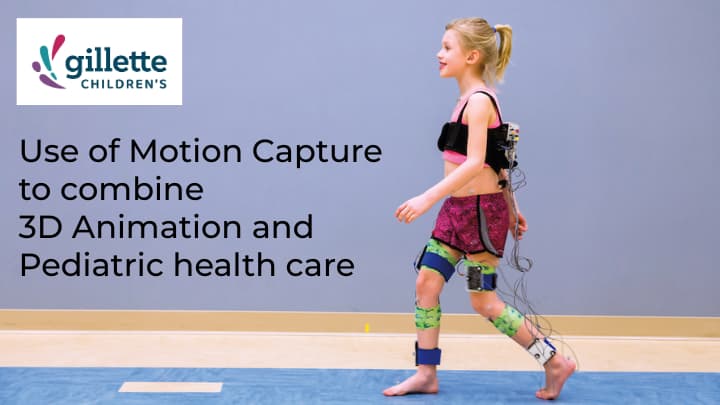
Gillette Children’s motion capture specializes in giving modern solutions to cure for children with complex disabilities and medical needs, especially those with brain, bone, and movement disorders. Some of the major are cerebral palsy, spina bifida, and epilepsy.
It is home to advanced clinical programs, such as the Cerebral Palsy Institute, which integrates cutting-edge research to improve children health care who has complex medical challenges.
About Gillette Children’s
Gillette Children’s was founded in 1897 as the first public hospital dedicated to children with disabilities in the United States. Its mission centers on providing expert medical, surgical, and therapeutic care to help children live full and productive lives. The hospital collaborates closely with families and primary care physicians to deliver individualized care through multidisciplinary teams, ensuring each child’s unique needs are met.
Success stories, like those of twins Ben and Kate, demonstrate Gillette’s commitment to guiding families through challenging diagnoses such as cerebral palsy, supporting them with comprehensive therapy and lifelong care.
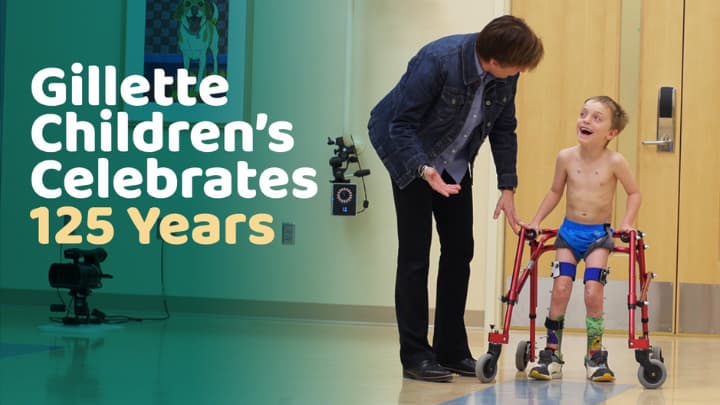
Over more than 125 years, Gillette has become globally recognized for its compassionate approach and innovation in pediatric specialty care.
What is Gillette Children’s Motion Capture system?
This is where the Pediatric health care meets Animation via AI tools. It is the fusion of medical science and 3D animation.
Gillette Children’s is renowned for its pioneering use of motion capture technology. In this innovative practice, children with physical disabilities wear reflective track marks (track points) that enable high resolution mapping of their movement. It is captured via motion capture technology and translates into respective animation. Such out of the box thinking has redefined both medical assessment and creative engagement.
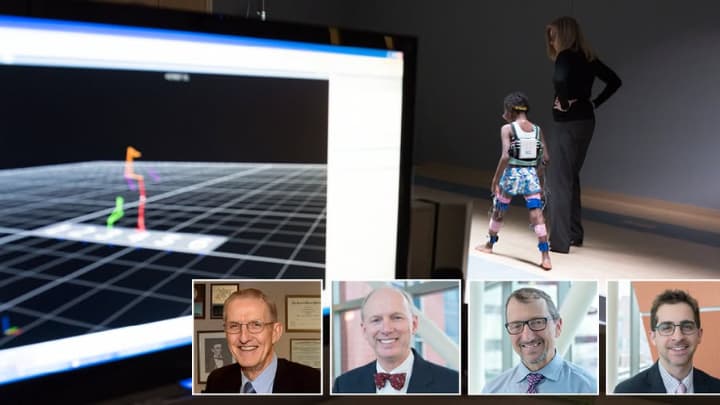
At its core, Gillette Children’s Motion Capture Program is a fusion of clinical gait analysis and real time 3D animation. The process starts as children, often diagnosed with cerebral palsy, spina bifida, or rare orthopedic conditions, don lightweight suits dotted with infra-red reflective markers. As each child moves (walking, running, or performing daily activities), the motion capture lab tracks every marker’s position hundreds of times per second. Algorithms then reconstruct an exact 3D digital skeleton that records joint angles, stride patterns, and compensatory motion.
Such real data unlocks new avenues for diagnosis and customizes therapies. The breakthrough comes in the integration of these biomechanical datasets into 3D animation pipelines. Leveraging partnerships with universities, animators, and research institutes, Gillette has begun to export children’s authentic movement profiles into CGI softwares like Autodesk Maya and Blender. So, now the disabled children can see their digital avatar as animated lions, horses, or tigers.
Such innovative idea merge the pediatric health care with digital storytelling.
Technical details of the motion capture and animation pipeline
The technical architecture underlying Gillette’s motion capture suite demonstrates both the expertise and trust that major hospitals in London or Toronto aspire to emulate.
The capture environment is shielded from electromagnetic interference, and each camera syncs at sub-millisecond intervals to avoid motion blur. Data throughput exceeds 1 gigabyte per patient session. Post-capture, orthopedic surgeons, biomechanical engineers, and animators collaborate during integration meetings. They reviews kinematic graphs and inverse dynamics reports. For children, the implementation is seamless. Advanced algorithms reconstruct each child’s three dimensional movements (biomechanical profiles) that are used to tailor medical care plans and optimize therapy.
“I watched my son’s walk animate a cheetah’s run in real time,” recalls a mother from Manchester, “and for the first time, he saw his uniqueness as something beautiful.” Such testimonials raise the program’s profile on both sides of the Atlantic and spur ongoing research.
Result oriented outcomes at Gillette can be measured both clinically and emotionally. Statistically, advanced gait analysis has cut corrective surgery rates by 25%, refined therapeutic timelines, and raised life satisfaction scores for children assessed via motion capture.
Integration between Gillette’s motion capture assets and commercial animation studios is achieved through industry standard data exchange formats. Motion data is exported as BVH or FBX files, which preserve hierarchical bone transformations along with customized marker sets. These files feed directly into animation rigs after normalization, allowing for the creation of lifelike animal motion. Studios use these datasets to generate characters, which are visually engaging.
The impact has only begun. Clinical motion capture at Gillette Children’s is now cited in over 50+ peer reviewed publications. The integration of real children’s gait into animal animation marks a shift not just in technology but in culture also.
Conclusion
Gillette Children’s motion capture technology has given new dimensions to cure children with complex physical disabilities. Children are no longer mere patients. They become the inspiration behind interactive cartoons, games, and educational tools.
All records are also stored in compliance with HIPAA and GDPR protocols, ensuring privacy and trust for families across the continents. The program is led by teams with advanced credentials in biomedical engineering and pediatric neurology, regularly updating protocols to match international best practices.
For deeper insight and current updates, visit Gillette Children’s research and animation partnership page.